
Why Concrete Is the Best Material for Battery Fire Containment Walling
Battery energy storage systems are vital to modern energy infrastructure, but storing large amounts of energy makes fire safety critical. If a battery fire occurs, surrounding infrastructure must help contain it, protect nearby equipment and limit fire spread. Choosing the right containment wall material is therefore essential. Concrete offers a compelling combination of fire performance, durability and structural resilience, says Owen Batham, Core Precast Director at Elite Precast Concrete.
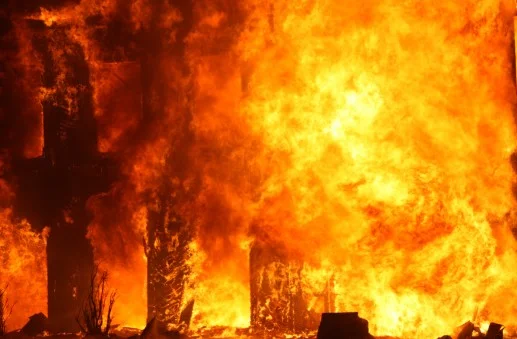
Why Battery Fire Containment Matters
Lithium-ion battery fires can present particularly challenging conditions. A failure within a battery cell can lead to thermal runaway, potentially generating intense heat and creating a risk of the incident spreading to neighbouring equipment.
Effective fire compartmentation can help create physical separation between battery installations and other critical assets.
The material used for these barriers therefore matters. A concrete fire wall provides a substantial, non-combustible physical barrier capable of performing in environments where heat, impact and long-term exposure all need to be considered.
Why Choose Concrete Fire Walls?
Concrete has several inherent characteristics that make it particularly well suited to fire containment applications.
Non-combustible
Concrete does not contribute fuel to a fire.
Unlike combustible construction materials, it will not ignite and help spread flames from one part of an installation to another. This makes concrete fire barriers a logical choice where compartmentation and separation are central to the site's fire-safety strategy.
Concrete Doesn't Melt
Extreme temperatures can significantly affect many construction materials. Concrete does not melt in the way some materials can when subjected to intense heat.
This is particularly valuable for battery installations, where the containment structure needs to provide a robust physical barrier under severe fire conditions.
No Toxic Smoke from Burning Concrete
Because concrete does not burn, the concrete itself does not produce toxic smoke through combustion.
This distinguishes it from combustible materials such as plastics, which can burn rapidly and generate smoke and hazardous combustion products.
High Thermal Mass
One of concrete's most important characteristics for battery fire containment is its high thermal mass.
Concrete can absorb significant amounts of heat, helping slow heat transfer through a barrier. In a battery installation, this can contribute to the separation between an incident and surrounding equipment.
Rather than simply creating a physical division, a substantial concrete wall can therefore provide valuable thermal separation as part of the overall fire-safety design.
Long Service Life
Battery storage infrastructure is typically designed for long-term operation, so the structures protecting it need to offer similar durability.
High-strength precast concrete is robust, weather resistant and low maintenance. Elite Precast products are manufactured using high-strength concrete are designed for a long service life with minimal maintenance. That makes concrete particularly attractive for external battery compounds and other critical infrastructure where reliability needs to extend well beyond initial installation.
Concrete vs Steel, Timber and Plastic
Different materials respond very differently when exposed to fire.
Material | Behaviour in Fire |
Concrete | ✓ Non-combustible |
✓ Long service life | |
✓ Doesn't emit toxic smoke through combustion | |
✓ High thermal mass | |
Steel | • Can lose strength at high temperatures |
Timber | • Combustible |
Plastic | • Can burn rapidly |
Steel is strong and widely used throughout construction, but elevated temperatures can cause it to lose strength. Depending on the application and required fire performance, additional fire protection may therefore be necessary.
Timber is combustible, making it less suitable where the primary purpose of a structure is to provide separation from a significant fire hazard.
Many plastics are also combustible and can burn rapidly, making them unsuitable as the principal material for a substantial fire containment wall.
Concrete, by contrast, combines non-combustibility, thermal mass, structural robustness and durability in a single material.
The Advantages of Precast Concrete Fire Barriers
Precast concrete adds another significant advantage: speed.
Instead of constructing a substantial containment wall entirely on site, precast units are manufactured in controlled factory conditions and delivered ready for installation.
Elite Precast's modular systems are designed for rapid installation and immediate use, helping projects adapt layouts while maintaining the resilience required in mission-critical environments. This approach can help reduce on-site construction time, labour requirements and disruption.
Modularity also makes it possible to create containment structures around individual battery units, groups of equipment or larger operational zones according to the requirements of the project.
How Legato® Creates Modular Containment Structures
Elite Precast Concrete's Legato® interlocking concrete blocks provide a practical way to turn the inherent advantages of concrete into a modular walling system.
Manufactured from high-strength precast concrete, Legato® blocks interlock to create substantial structures without relying on traditional masonry construction methods.
The modular approach enables walls to be installed rapidly and configured around the requirements of a particular site. Elite's interlocking systems can be used for temporary or permanent infrastructure, providing flexibility as sites develop or layouts change.
For battery installations, this creates the potential to form robust separation and containment structures around critical equipment while retaining the practical advantages of a modular precast system. Legato® systems are also designed for rapid installation without specialist fixing methods, helping reduce construction time and minimise site disruption.
This makes the system particularly attractive for operational energy, industrial and data centre environments where lengthy construction programmes can be difficult to accommodate.
Modular Protection for Changing Infrastructure
Battery storage facilities are not necessarily static.
Capacity may increase, equipment may be replaced and site layouts can evolve as operational requirements change. A modular concrete walling system offers an important advantage in these environments because containment structures can be designed around individual project requirements rather than relying solely on conventional permanent construction.
Elite's modular walling systems already support applications including service compounds, equipment storage bays and temporary or permanent site divisions.
This combination of concrete fire performance and modular construction makes Legato® a strong option for projects requiring robust physical separation around battery infrastructure.
Building Safer Battery Storage Infrastructure
As battery energy storage becomes increasingly widespread, fire containment and infrastructure resilience will remain fundamental considerations for designers, developers and operators.
The construction material selected for containment walls can play an important role in that strategy.
Concrete offers several inherent advantages:
Non-combustible construction
No melting under fire conditions
No toxic smoke produced by the concrete burning
High thermal mass
Robust physical protection
Long service life
Low maintenance requirements
Combine these properties with the speed and flexibility of modular precast construction and concrete fire walls become an effective solution for protecting modern battery infrastructure.
With Legato®, Elite Precast Concrete can provide high-strength interlocking concrete blocks that enable substantial modular walls to be installed quickly, helping projects create durable containment and separation structures around critical assets, including battery storage, energy infrastructure, data centres and other high-risk environments, concrete fire barriers provide the resilience required when containment matters most, concludes Owen.